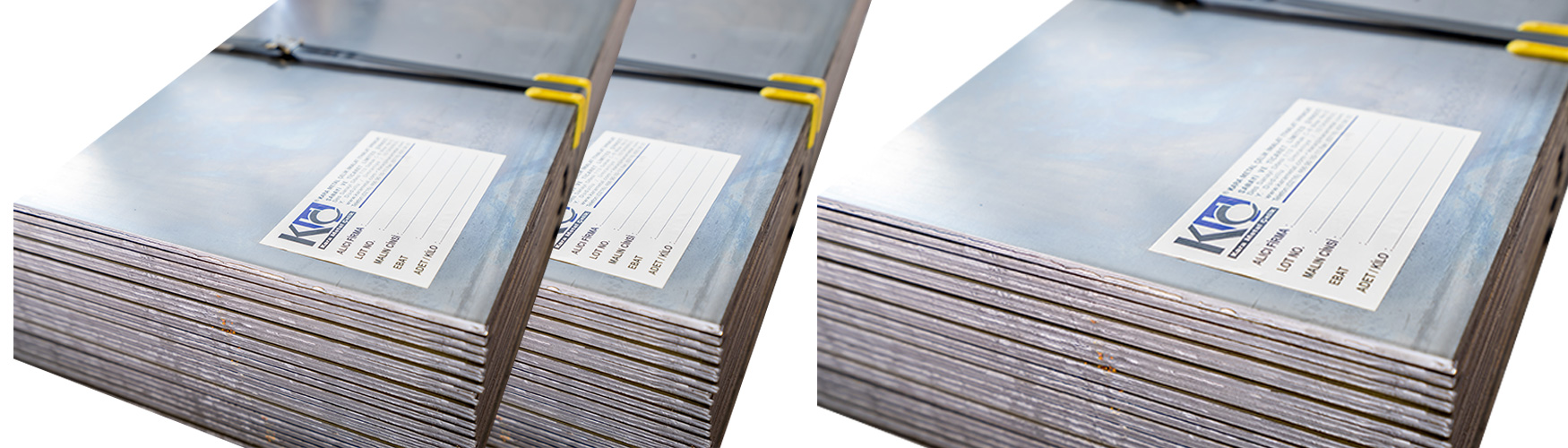
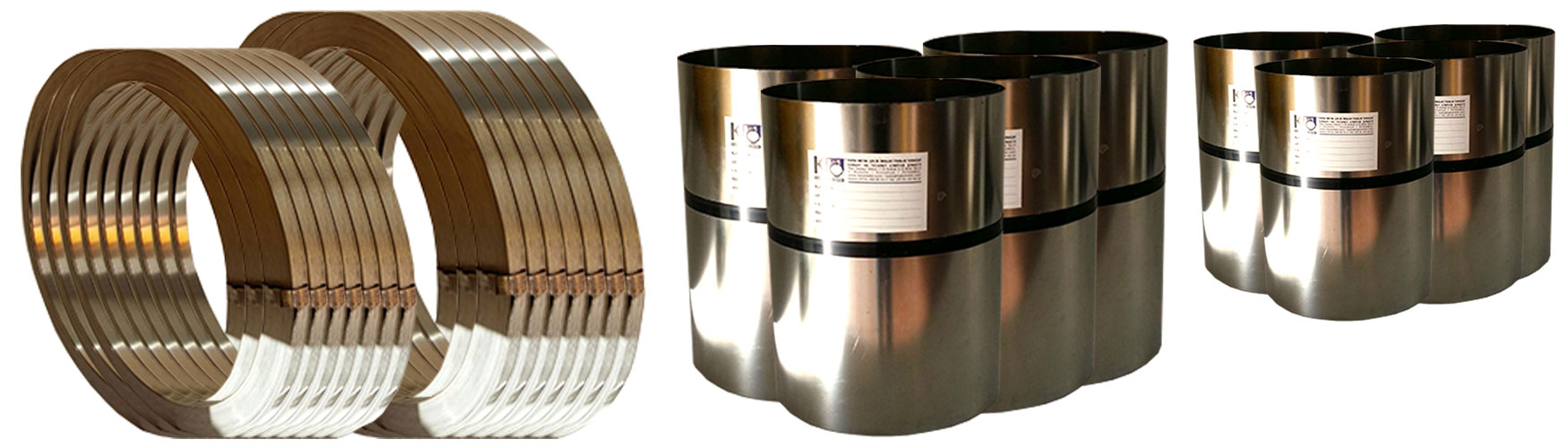
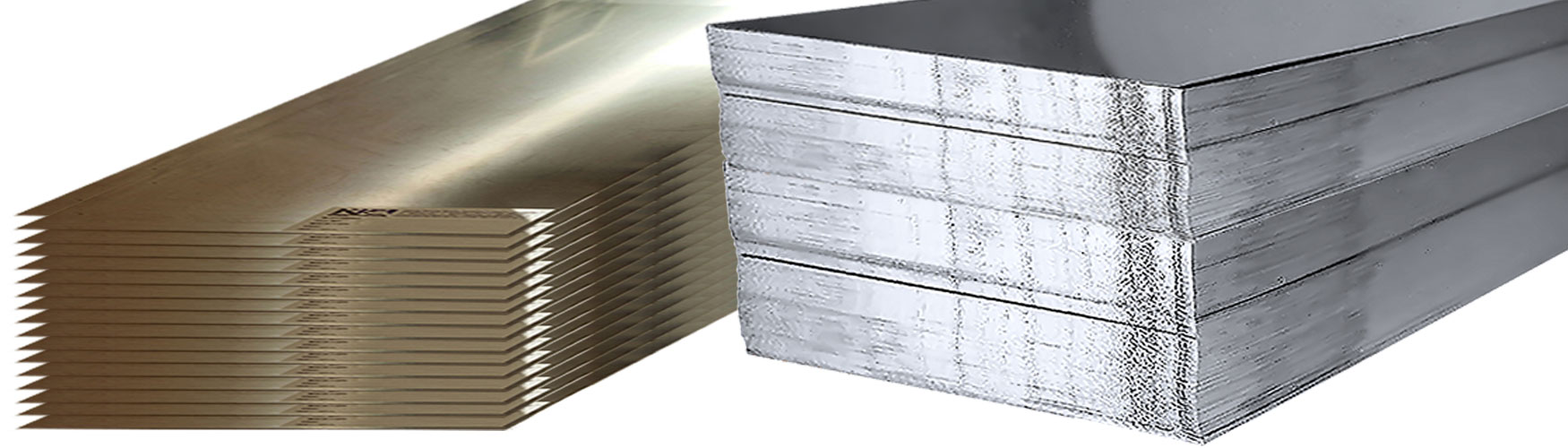
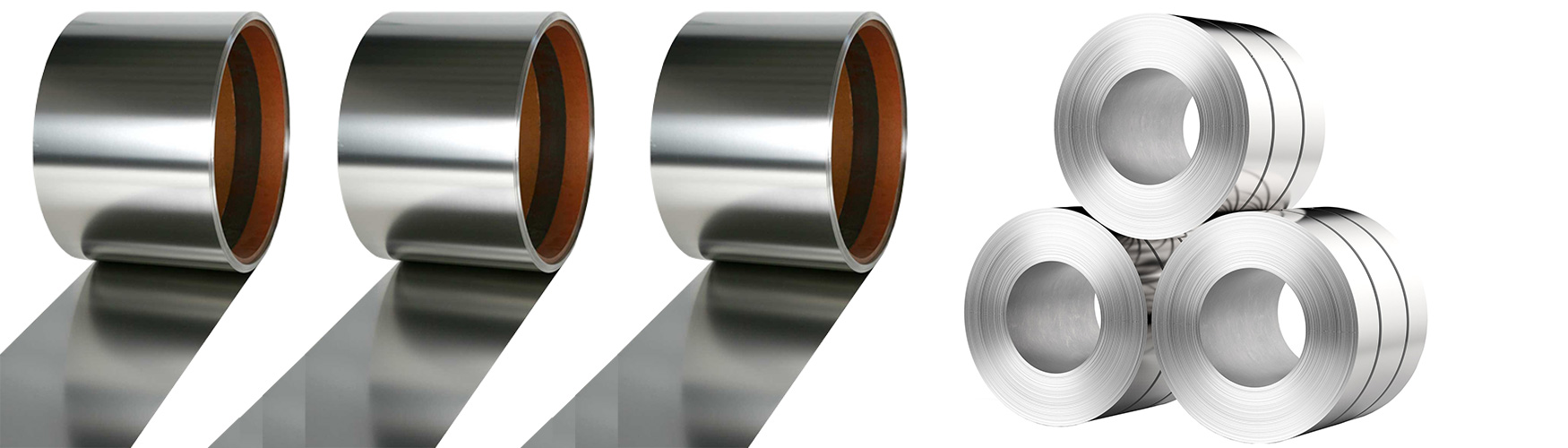
Deep Drawing Austenitic Steels
X2CrNi19-11 – 1.4306 / 304L / SUS304L / Z2CN18-10 / X2CrNi18-11 / 2352 / 00H18N10 / 720 / 03KH18N11
X2CrNi19-11 – 1.4306 stainless steel belongs to the group of austenitic stainless steels and is specifically developed for applications requiring high corrosion resistance and excellent weldability. Commonly known as AISI 304L or SUS304L, this grade is the low-carbon version of standard 304 stainless steel. The designation “L” (Low Carbon) indicates reduced carbon content, which minimizes the risk of intergranular corrosion after welding.
This steel typically contains approximately 18–20% chromium and 8–11% nickel. This composition provides good general corrosion resistance while also offering a bright and aesthetically pleasing surface finish. Thanks to its low carbon content, the risk of grain boundary corrosion in welded structures is significantly reduced, making it highly suitable for fabrications involving extensive welding.
X2CrNi19-11 steel is suitable for both hot and cold forming processes. It performs reliably in operations such as bending, cutting, deep drawing, and welding. Its high ductility allows it to absorb impact without cracking and enables easy forming, providing flexibility in manufacturing processes.
In terms of corrosion resistance, it performs well in humid environments, mild chemical conditions, and outdoor applications. However, in environments with high chloride content, more highly alloyed grades such as 316L may be preferred.
Another key advantage of this steel is its hygienic surface structure. Its smooth and easy-to-clean surface makes it ideal for use in the food and healthcare industries. In addition, its attractive appearance makes it suitable for decorative and architectural applications.
Overall, X2CrNi19-11 – 1.4306 (304L) stainless steel is a reliable and versatile engineering material, offering a combination of durability, workability, and cost-effectiveness across a wide range of industrial applications.
Main Application Areas
- Welded stainless steel constructions
- Food and beverage processing equipment
- Chemical and process industry equipment
- Pipes, tanks, and storage systems
- Architectural and decorative applications
- Kitchen equipment and household items
- Medical and hygienic applications
- Various components in the automotive industry
- Industrial machinery and equipment manufacturing
Thanks to these characteristics, X2CrNi19-11 – 1.4306 (304L) stainless steel is widely preferred as a balanced and reliable material, especially in applications requiring weldability and hygiene.
General Identity
X2CrNi19-11 – 1.4306
| Grade |
X2CrNi19-11 |
| Number |
1.4306 |
| Classification |
Austenitic Stainless Steel |
Equivalent Grades
X2CrNi19-11 – 1.4306
| USA |
316L |
| Japan, JIS |
SUS304L |
| France, AFNOR |
Z2CN18-10
Z3CN18-10 |
| England, BS |
304S11 |
| Italy, UNI |
X2CrNi18-11 |
| Sweden, SS |
2352 |
| Poland, PN |
00H18N10 |
| Finland, SFS |
720 |
| Russia, GOST |
03KH18N11 |
Standards
X2CrNi19-11 – 1.4306
| Standard 1 |
EN 10088-2: 2005 |
| Standard 2 |
EN 10088-3: 2005 |
| Standard 3 |
EN 10028-7: 2007 |
| Standard 4 |
EN 10216-5: 2014 |
| Standard 5 |
EN 10217-7: 2005 |
| Standard 6 |
EN 10296-2: 2005 |
| Standard 7 |
EN 10253-4: 2008 |
| Standard 8 |
EN 10272-2: 2007 |
| Standard 9 |
EN 10263-5: 2001 |
| Standard 10 |
EN 10250-4: 2000 |
| Standard 11 |
EN 10297-2: 2005 |
| Standard 12 |
EN 10253-3: 2008 |
| Standard 13 |
EN 10088-1: 2005 |
| Standard 14 |
EN 10088-5: 2009 |
| Standard 15 |
EN 10088-4: 2009 |
Chemical Composition
X2CrNi19-11 – 1.4306
| C |
max 0.33 |
| Si |
max 1.00 |
| Mn |
max 2.00 |
| Ni |
10 – 12 |
| P |
max 0.045 |
| S |
max 0.015 |
| Cr |
18 – 20 |
| N |
max 0.11 |
Mechanical Properties
X2CrNi19-11 – 1.4306
| Rm – Tensile strength (MPa) (+A) |
460 – 700 |
|
| Rm – Tensile strength (MPa) (+AT) |
460 – 680 |
|
| Rm – Tensile strength (MPa) (+AT+C) |
740 – 780 |
|
| Rp0.2 0.2% proof strength (MPa) (+AT) |
180 |
|
| Rp0.2 0.2% proof strength (MPa) (+A) |
180 – 220 |
|
| KV – Impact energy (J) transverse (+A) |
+20° – 60 |
-196° – 60 |
| KV – Impact energy (J) longitud (+A) |
+20° – 100 |
|
| A – Min elogation at fracture (%) (+A) |
35 – 45 |
|
| A – Min. elongation at fracture (%) longitud., (+AT) |
40 |
|
| Nominal diameter (mm) (%) (+A) |
2 – 50 |
|
| Z – Reduction in cross section on fracture (%) |
63 – 68 |
|
| Birinel hardness (HB) (+A): |
215 |
|
| Birinel hardness (HB) (+AT): |
200 |
|